Admittedly, the Windles were all pretty jaded with the early flight into Arturo Marino Benitez airport. But as the taxi eventually pulled up outside our accommodation we had serious concerns about rushing the research. There was no expectation of luxury but Expedia images can also lie, and the entrance of iron bars and an intercom-only accessible door cemented things.
Ah well. Hello Santiago. Rather than waste time lazing in the room, we opted to dump the bags, head straight out into the late afternoon sun and explore the adjacent Barrio Bellavista just a few blocks away.

Any apprehensiveness soon faded. I’m not sure whether afternoon siestas are a thing in Chile—certainly a redundant tradition in modern-day Spain—but as we turned into the main streets the atmosphere was one of serenity. The bars were empty and there were little signs of life other than shop keepers going about their business. OK, as we later discovered, Bellavista can get sketchy in certain parts after midnight, but no worse than anything we had experienced in other major cities.

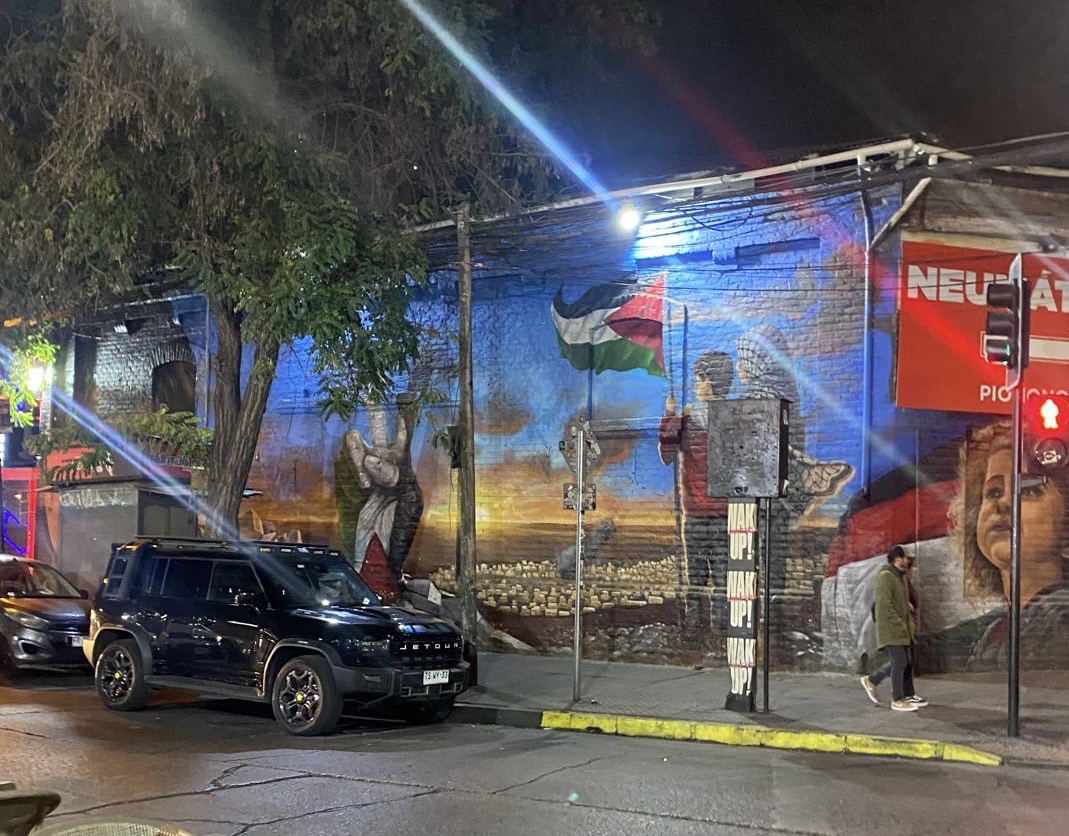
Barrio Bellavista street art
Our focus was more on a few days of easily assimilated cultural appreciation than late night drinking sessions. We wanted bohemian vibes, and Bellavista offers that in spades. Over the decades, this area of Santiago has been a welcome home to students, poets, literary leaders—and street artists.
The art adorning the buildings, walls and river embankments is not unique to Bellavista. Graffiti and elaborately executed public murals can been found throughout Chile’s capital. But for those wishing to sample street art at its best, this barrio is an obvious choice. It’s also a particularly convenient one for tourists: Bellavista is situated at the foot of Cerro San Cristóbal—a Trip Advisor top-hitter, complete with woodland walkways, ornamental gardens, cable car, the obligatory statue of Christ, and sprawling cityscape views.

(photo copyright E. Mark Windle).
Below San Cristóbal, the visual impressiveness of Bellavista’s street murals is undeniable. The quality of work is also an indication that many projects here are more carefully planned and executed than those seen in other parts of the city. There’s little evidence of spontaneous defacement or tagging over existing work here.

Bellavista’s creatives cohabitate, and on the whole there is harmony. Much of the high impact, publicly visible work has been commissioned by the property owners. Of course, there’s no shame in that—Chile’s economy may not be as volatile as its neighbour Argentina though goods, including artists’ materials, are relatively expensive. Even in laid back Bellavista, street artists struggle to make a living due to financial challenges and competition.

A turbulent history
Chile’s past has been marked by intermittent periods of dictatorship and democracy. Social oppression and the desire to form a revolutionary collective has been a major driver in the convergence of artists, writers and poets in regional pockets of Santiago. In previous decades street art has reflected those difficult times.

Street murals were and continue to be a highly visible means of protest, as well as celebration of local social and political achievement. Political art was especially dominant during the dictatorship of General Augusto Pinochet between the early 1970s and 1990, with artists and photographers often working alongside movements such as Partido Socialista.

With the gradual return of democracy, aesthetic or flamboyant themes came to the fore, often using painting techniques borrowed from New York and Europe but given a Chilean twist. Regardless, political influences remained. Even in our brief time exploring Bellavista it was obvious that street art remains an important vehicle for expressing humanitarian concern, with prominent references to the Palestinian struggle and a call for freedom of the people of Gaza.

Permanency
Chilean street art is ever-evolving. It reflects both the zeitgeist and a counter reaction. There are also practical reasons why permanency of displayed art is not guaranteed. Buildings are demolished, or restructured. Residential, café and bar owners eventually move on. New owners have different tastes (or political leanings) and seek fresh illustrative themes. More rarely, taggers take their chances and paint over existing work. The artists of Santiago accept all this, but thankfully social media platforms and ‘protected’ open air museums provide means of historical preservation.

Further reading
For a deeper dive, check out the illustrated book “Street Art Santiago” by Lord K2 (Schiffer Publishing Ltd.). The author explores the cultural history and social context of the movement, and interviews over 80 artists and connected figures on the street art scene.
Check Expedia for the top 10 4-star hotels in Santiago here https://expedia.com/affiliate/TbXgilf
Copyright (E. Mark Windle, 2025).
Join the discussion here