Rightly, history books are full of how African American racial and cultural identity was suppressed in the southern US states. Even North Carolina, sometimes cautiously described as one of the more ‘progressive’ states of the South, was not entirely exempt from a reputation of hostility toward Black communities. In the 1960s, this was ably demonstrated by the presence of the Klan’s largest chapter based in Salisbury, NC. Here, the KKK exploited and groomed poorer White communities in rural areas, where generations were still reeling from repercussions of the Great Depression decades earlier. In more urban areas, the door wasn’t exactly always open either, even after the landmark 1964 Civil Rights bill was passed. That said, a deeper dig reveals that, even well before the Act, in some pockets of White Carolinian society there was embracement of elements of Black culture. In particular, music.
Somebody once said, “if you’re from North Carolina you may as well be a Yankee”. An implied reference to tolerance and liberalism perhaps, the essence of which may well now be blurred due to social and political divisions of recent years. But scroll back seventy years ago, when Black music became widely accessible for the first time to a young white audience. Granted, that was partly a reflection of the national post-rock ‘n’ roll revolution, and of increasing social and cultural awareness. But in the southeastern states, there was also a direct influence from the rich African American musical heritage which immediately surrounded them.
MIGRATION
In times before and during the Civil War, enslaved individuals would be a higher prized asset if they had specific skills. Many would be taught to play guitars, fiddles and banjos for the purpose of entertaining the households of their slavemasters and at society functions. Life was far from perfect following official emancipation, but one effect was lateral migration and formation of close-knit communities in the southeast. Convergence of talent was also inevitable. The musical skills developed by elders in their former period of enslavement were now passed onto younger generations. Local influences outside the immediate community would also be added to the mix. New styles, such as the string plucking and rhythmic bass patterns of the Piedmont blues, would emerge.
Meanwhile, ongoing racism, social oppression, poverty, and the advent of two World Wars were major drivers for mass migration of Blacks up the east coast. Munition and clothing orders for armed forces provided some opportunities for work in New York. With many musicians settling in Harlem, further fusion of styles occurred.
Over two million members of the Black communities in North Carolina travelled north between 1900 and the 1940s. Many never returned south; but eventually some brought new musical approaches back to their old communities. The southeastern states could differentiated by musical genre: North Carolina became the regional home of jazz and gospel, and South Carolina more often associated with the rural roots of country, bluegrass, blues and spirituals.

Image: E. Mark Windle.
THE DEVIL’S MUSIC
The rock ‘n’ roll era of the 1950s would mark the first major interface of inter-racial musical appreciation among teenage America. Historians usually focus on the blues of the Mississippi River as an origin story, a musical format which in turn was informed by multiple cultural influences between New Orleans to Memphis. Where generations of parental conservatism and cultural and musical naivety existed within many White households, this was being progressively eroded. The rapid pace of social, political and musical change could not be ignored. Teenagers were listening to the likes of Chuck Berry playing the devil’s music. The scene was set for the next decade of young rebellion, social conscience, and student lunch counter sit-ins.
By the mid 1950s Carolinian teens were tuning into The Clovers, The Five Royales and Clyde McPhatter. Arthur ‘Guitar Boogie’ Smith was another household name in the Carolinas. Smith was a White talented country music composer, guitar player, fiddler and radio presenter, whose career rocketed after the Second World War with his Calling Carolina radio show and WBTV’s Arthur Smith Show. The genre associated with Smith as a musician may have been a million miles away from race music or race-influenced music, but through his talent hunts, numerous doo-wop acts were discovered who would go on to become big names in the years to come. Other TV shows followed suit showcasing teenage music talent in North Carolina. Arthur Smith Studios in Charlotte would be a point of convergence for singers and groups desperate to record R&B, soul and pop music through the 1960s.

Image: courtesy of Bob McNair.
BUCHANAN’S OF SANFORD, NORTH CAROLINA
Bob McNair, a White North Carolina resident, has been a music fan for pretty much all of his adult life. Brought up in Sanford and now residing in Winston-Salem NC, he recounts his earliest memories of his record buying days. “I distinctly remember my very first 45 record purchase” says Bob. “In 1961, my friend Billy Neal and I combined funds (basically 50 cents each) to buy Blue Moon by The Marcels at Buchanan’s TV, Appliances and Music store in Sanford, NC. Buchanan had a fully stocked record shop inside his premises. It was sound proofed with thick double paned glass so that you could crank up the volume on the high-end stereo system with a manual turntable.
That little shop was loaded with all the current 45s and LPs of the day including pop, rock, soul, country and Black gospel. Mr. Buchanan would make weekly trips to Charlotte in his private airplane to stock up on the latest releases and hot sellers. I worked in the shop sometimes on the weekends, often for free or maybe for a couple of records. Black kids would come in to buy the latest R&B, soul and black gospel, like the Blind Boys of Alabama. I was really digging this music and was exposed to songs I might never have heard otherwise. Screw Pat Boone, The Beach Boys and The Beatles! We wanted James Brown, Joe Tex, Booker T. & the M.G.s, The Temptations, The Tams, Wilson Pickett, The Showmen, Gene Chandler, The C.O.D.s and others. For me, that was the beginning of a lifetime of loving soul music.”
RADIO STATIONS OF NORTH CAROLINA
Only a couple of dozen radio stations existed in North Carolina until after World War II when FM was introduced. An increase in approved licence applications commenced in the 1950s, with radio stations bringing rock ‘n’ roll, doo-wop and eventually soul to a whole new younger listening audience, attracted to late night R&B programming. Certain radio stations in the Carolinas, Virginia and Georgia were essential in exposing black and white teenagers to race music during the late 1950s and 1960s. WGIV (We are GI Veterans; a patriotic nod to the end of World War II) was a culturally integrated station serving the metropolitan area of Charlotte.
In the late 1940s Francis Marion Fitzgerald, founder of the station and owner of the Publix Broadcasting Service of Charlotte Inc., had arrived at the then unique concept of a station focused on or inclusive of the African American community. The idea was effectively a response to an untapped commercial opportunity, much in the same way as WLAC operated in Nashville. WGIV adopted an integrated approach both in its employee profile, business affairs and music programming, a unity symbolised by the station’s logo of a white hand shaking a black hand. Whilst later in the decade the inter-racial ideology of the station would be marred by rising in-equalities at work and national race issues, for most of the 1960s WGIV was well placed to play emerging R&B recordings and were actively involved in auditioning, promoting and managing local acts.
WAYS radio station, located at 400 Radio Road, had also been around since the 1940s and broadcast at 610 AM. Prior to Stan and Sis Kaplan from Boston buying the place and licence for $550,000, the little white building was physically deteriorating, and its programming held little interest for young people in the area. In their eagerness to appeal to teenagers, the Kaplans renamed the station Big WAYS and in spring of 1965 opened with a top 40 chart format featuring pop and R&B. No expense was spared in obtaining top personalities, charismatic DJs and attractive competitions to engage a new audience. The $1000 treasure hunts presented by Jack Gale went down well, though perhaps more with the listeners than the local police force who had to contend with individuals digging up fields, gardens and plots around the city. WAYS would also support local concerts and became the local leader for young radio listeners. The station was sold some thirty years later, along with its FM counterpart, for over $13 million.
Other stations played their part, such as WBAG where DJ Jim Conklin reputedly broke The Showmen’s 39-21-46 on air, now considered a beach music classic. However, local stations were also receiving heavy competition from Nashville’s WLAC, which was continually pumping out blues, soul and R&B. A never-ending supply of material would be played by White DJ John ‘R’ Richbourg via the symbiotic relationship with sponsors Ernie Young and Randy Wood, both owners of vinyl record mail order companies and record label involvement.
WLAC initially ran a community orientated news schedule but changed its policy when another competitor WSM was gaining popularity in playing country music. WLAC had a 50,000-wattage broadcasting capability, enabling 28 states to receive a signal, even reaching parts of Canada and the tip of south Florida. The initial intention of WLAC’s new programming was to serve the relatively untapped Black community market across the major cities and the deep south. As race music became labelled R&B, John Richbourg and colleague Bill Allen would run their respective slots promoting recordings by Nashville and national black artists. These shows would be broadcast at night when the signal was strongest and coverage by WLAC had, in a literal sense, far-reaching effects.
THE SHAG
The national dance of South Carolina, the Shag, has also played a part in sustaining the interest in R&B through the decades in the region. Enthusiasts and academics have long argued over the origins of the Shag and the changing musical scenes which surrounded it. There does however appear to be consensus that several seemingly unrelated factors came together to form the post-war Shag phenomenon, including the presence of the military, radio, and Big Bands. One legend goes that jump blues was the initial genre trigger, played by returning merchant seamen to a largely white audience at Jim Hanna’s Tijuana Inn at Carolina Beach in the late forties.
Another story, from the same era, goes that a young man named Harry Driver was captivated by the race music of Buddy Johnson Orchestra whilst attending the Wilmington Armory Dances. In awe of the improvised Jitterbug and Lindy Hopping he witnessed by local youths and servicemen on shore leave, Harry was reportedly one of the first to add in additional ‘whip’ steps. The dance and the associated social scene blossomed. Other neighbouring centres quickly became synonymous with the Shag, most notably the popular summer seaside resort of Myrtle Beach, and vacationing teenagers. Over subsequent decades, the Shag scene would encompass a range of new musical styles, though its closest association remains with early R&B of the late 1950s and soul music of the 1960s.
LIVE MUSIC IN THE 1960s
The domino effect following the delivery of soul via the airwaves in the early to mid-1960s was inevitable. Along the east coast a new enthusiasm was born for emerging R&B recordings, much as had happened for rock ‘n’ roll some five years earlier. Vacationing teenagers were now being treated to exciting soul music-orientated Show and Dance nights in the beach pavilions.

The Rivieras, with Georgia Hand, at Tanglewood Country Club, North Carolina 1967 (image courtesy of Nat Speir).
Away from the coast, clubs throughout the Carolinas, Virginia and Georgia featured similar live acts. Booking agents, perhaps most notably Ted Hall and his Hit Attractions company were kept busy, booking Motown artists and other national acts for venues around Charlotte, Myrtle Beach, Greensboro, Williams Lake, Winston-Salem and others. College students and high school classmates also wanted in on the action, forming their own bands to emulate the sounds they loved and create their own brand of soul. Talent agents quickly sought these out to add to their list for hire at high school sock hops, country clubs and frat parties. Bands which would also prove invaluable for opening sets or as backing bands for visiting solo artists and vocal groups.
“We were what you’d probably refer to as middle-class White. Our neighbourhoods really did look like Beaver Cleaver’s from the 1960s TV show” says Nat Speir, founder member of the Charlotte-based group The Rivieras. “But we were very conscious of the race issue and the sensitivity of our Black acquaintances and friends. We talked about this a lot with Curtis Mayfield when we worked with The Impressions in Charlotte. Some of my friends’ parents invited four young black men from the Bedford-Stuyvesant project in New York to come and spend a summer with us in our homes, sponsored by an ecumenical group. They were singers too, fancying themselves as a younger version of Little Anthony and the Imperials. We gigged together for about four months and learned a great deal from each other. There were lots of tricky situations with these guys and with some of the national acts on the road. But booking agents tended to protect the groups—they wanted to make money, so it was in their interests. Also, in the early to mid 1960s North Carolina wasn’t quite the same as Mississippi. Attitudes were often cool in Charlotte, Greensboro and Columbia. At least among my peers. True, we were an entitled bunch, and the larger cities and towns were clearly segregated in many ways. But there were ways in which we interacted. White teenagers were developing an interest in Black music. I heard and got to know many R&B and soul acts in those places, admittedly usually on my turf. I doubt I would have been welcome on theirs at the time, and that’s fair.”
REACHING OTHER SHORES
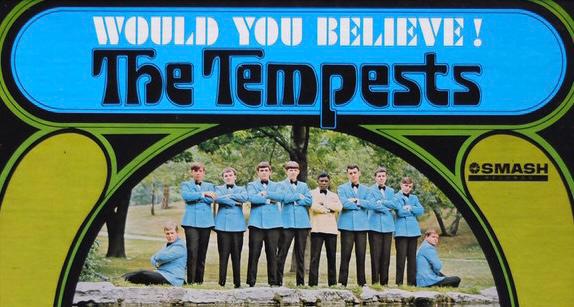
On the face of it an underground soul music scene of the UK, Europe and beyond seem geographically disconnected to the Carolinas’ musical quirk of history, yet it has been part of its preservation. Releases by local groups such as The Embers, The Tempests, The Spontanes, Maurice Williams and the Zodiacs and others have been embraced within this subculture for decades now. Recordings have been ‘re-discovered’ and given a second lease of life. Others have been unearthed for the first time. Record collectors, dancers, and writers have all been inspired to explore the history of these recording artists; providing global exposure for what was essentially a regionally confined entity. But that’s another story.
Join the discussion here